
Protein: Why It Matters, How Much You Need, and What to Eat
The Short Version
CrossFit founder Greg Glassman's prescription for world-class fitness begins with a single line — and it has nothing to do with training: "Eat meats and vegetables, nuts and seeds, some fruit, little starch, no sugar." Nutrition sits at the base of CrossFit's athlete development pyramid for a reason. Everything you do in the gym — every PR, every faster WOD time, every rep — is built on top of what you eat.
Protein is the most important piece of that foundation. Without enough of it, you recover slower, build less muscle, and feel more beat up than you should. If there's one nutrition habit worth locking in, it's hitting your protein target every day.
What Protein Actually Does
Every time you train, you create microscopic tears in your muscle tissue. Protein — specifically the amino acids in it — is what your body uses to repair those tears and rebuild the muscle stronger. No protein, no adaptation.
Beyond muscle repair, protein:
Supports faster recovery between sessions, so you're not dragging into Wednesday's WOD still sore from Monday
Preserves muscle mass when you're in a calorie deficit (critical if you're trying to lose fat without losing strength)
Keeps you fuller, longer — protein is the most satiating macronutrient, which makes hitting your nutrition targets easier
Protects your immune system — heavy training temporarily suppresses immunity; amino acids like glutamine help keep it in check
Muscle Is Your Long-Term Investment
Here's the bigger picture most people miss: muscle isn't just about performance. It's your primary defense against chronic disease and age-related decline. Muscle is the body's main organ for glucose disposal — meaning it's what keeps your blood sugar stable and helps you avoid Type 2 diabetes. It sends signaling molecules to the brain that keep you sharp and mentally flexible. And it's the single biggest predictor of how well you age. Research consistently links low muscle mass to higher all-cause mortality — meaning loss of muscle predicts early death from virtually any cause.
Muscle has been called a "health pension account." What you build now pays dividends for the rest of your life. Protein is how you make those deposits.
Signs You're Not Getting Enough
Most people aren't severely protein deficient, but chronically under-eating protein is surprisingly common — especially for active people. Symptoms to watch for:
Persistent muscle soreness that doesn't clear up between sessions
Slow recovery — always feeling beat up
Fatigue that doesn't improve with sleep
Gradual loss of strength or lean muscle over time
Brittle hair and nails
Getting sick frequently
Poor sleep
Weak bones (over time)
If any of these sound familiar, protein intake is one of the first places to look.
How Much Protein Do You Need?
The old RDA of 0.8g per kilogram of body weight was set for sedentary people. You are not sedentary.
For active CrossFitters, the research is consistent:
Target: 0.7 – 1.0 grams per pound of body weight per day
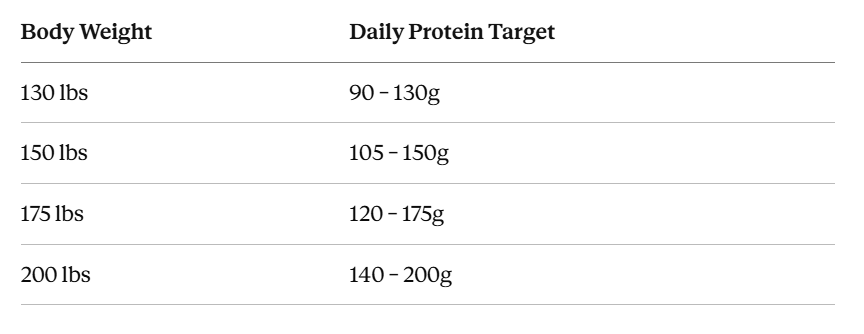
If you're newer to training, in a fat-loss phase, training at high volume, or over 40, stay toward the higher end of that range. More experienced athletes with stable body composition can get by toward the lower end.
Spread it out. Aim for a minimum of 30g of protein per meal, distributed evenly across the day. Your body can't store amino acids the way it stores carbs and fat — it needs a consistent, frequent supply. Slamming 100g in one sitting and eating nothing else isn't the move.
Post-workout matters. Getting 30–40g of quality protein within 30–60 minutes after training is one of the highest-leverage habits you can build. This is when your muscles are most primed for repair and growth.
Protein and Weight Loss
If fat loss is a goal, protein becomes even more important — not less. When you're eating in a calorie deficit, your body is at risk of burning muscle for fuel alongside fat. Higher protein intake (toward the 1.0g/lb end of the range) is what protects your lean mass during a cut, so you come out leaner rather than just lighter. It also keeps hunger in check, which makes sticking to a deficit a lot more manageable.
Best Protein Food Sources
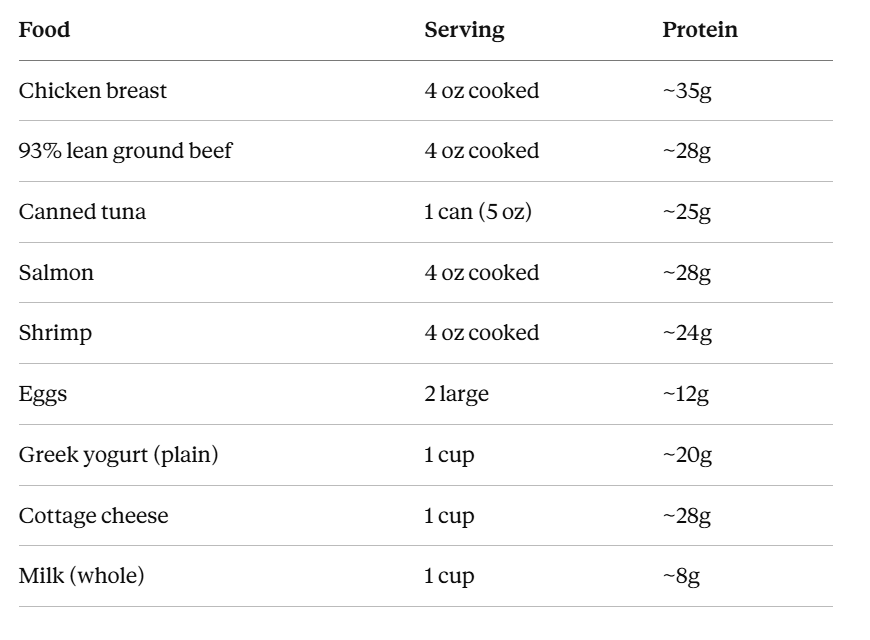
You don't need to overthink this. Real, whole food sources are almost always the best option. These are complete proteins — they contain all the essential amino acids your body can't make on its own.
One amino acid worth knowing: leucine is the primary trigger for muscle protein synthesis. It's found in high concentrations in beef, chicken, pork, tuna, salmon, cod, and cheese — another reason whole animal foods are the gold standard.
What About Protein Powders?
Powders are a legitimate convenience tool — not a replacement for real food, but a useful gap-filler when you're busy or struggling to hit your daily target. A well-timed shake post-workout or added to a meal can make the difference between hitting your numbers and falling short.
The problem is most protein powders on the market are junk. Here's what to look for:
Keep the ingredient list short. A quality protein powder should have a handful of recognizable ingredients. If you need a chemistry degree to read the label, put it back. Whey protein concentrate or isolate, a natural flavor, and maybe a small amount of sunflower lecithin for mixability — that's all you need.
Avoid artificial sweeteners. Sucralose, acesulfame potassium (Ace-K), and aspartame are in almost every mass-market protein powder. Research continues to raise questions about how these affect gut health and metabolic response. They're not worth the tradeoff. Look for powders sweetened with nothing, or with small amounts of stevia or monk fruit if you need it sweet.
Skip the proprietary blends and "performance matrices." These are marketing, not nutrition. You're paying for ingredients you don't need and can't verify dosages on.
What to look for in a quality powder:
Whey protein isolate or concentrate as the first ingredient
20–25g of protein per serving
Under 5g of carbohydrates
No artificial sweeteners, colors, or fillers
Third-party tested (look for NSF Certified or Informed Sport on the label)
Brands worth looking at: Thorne, Momentous, Naked Nutrition, and Levels all meet these criteria. They cost a bit more — because they're made of actual food-grade ingredients rather than fillers. Worth it.
These are two that we recommend:
Raw Grass Fed Whey Protein Powder
Equip Foods Prime Protein Powder
Bottom line: food first, powder second. A shake is a tool to close the gap, not the foundation of your protein intake.
The Practical Takeaway
Figure out your target. Body weight in pounds × 0.8 is a solid starting point.
Eat protein at every meal. Breakfast is where most people fall short.
Time it around training. Pre- or post-workout protein matters.
Track for a week. Most people are surprised how far under they've been.
You're already doing the hardest part by showing up. Dialing in your protein is the multiplier on that work.